
Wedding or Elopement in France: How to Choose?
Wedding or Elopement in France: How to Choose
Somewhere between "we're engaged" and "we booked a château," most couples planning France from abroad hit the same fork: a full destination wedding with the people they love, or an elopement with nobody but the light. I photograph and film both, all season, across France and Europe, and I have watched hundreds of couples live with each choice afterward. This page is the honest comparison I give them when they ask, because the right answer is not about budget first. It is about how you want the day to feel.
The real difference is not size, it is gravity
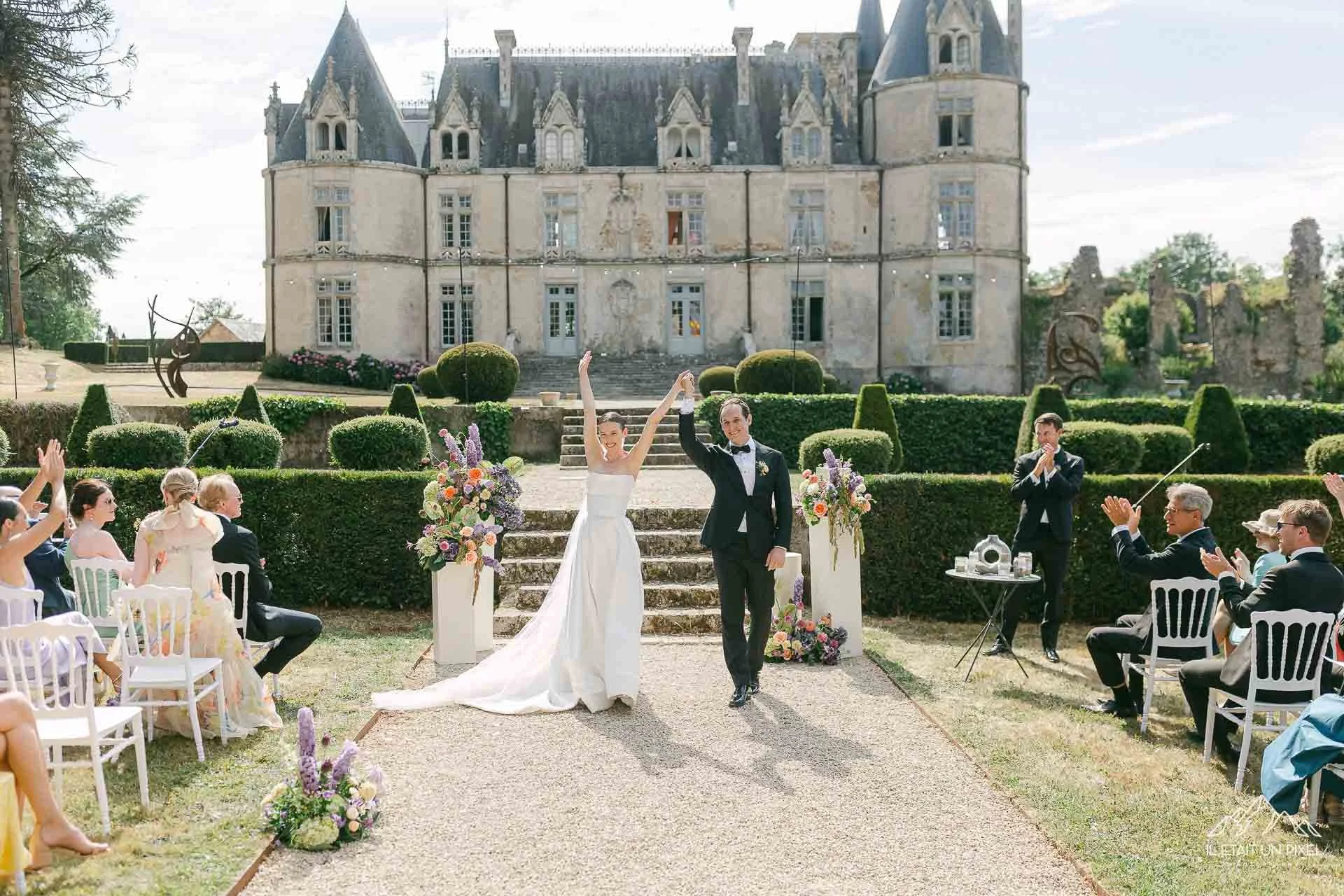
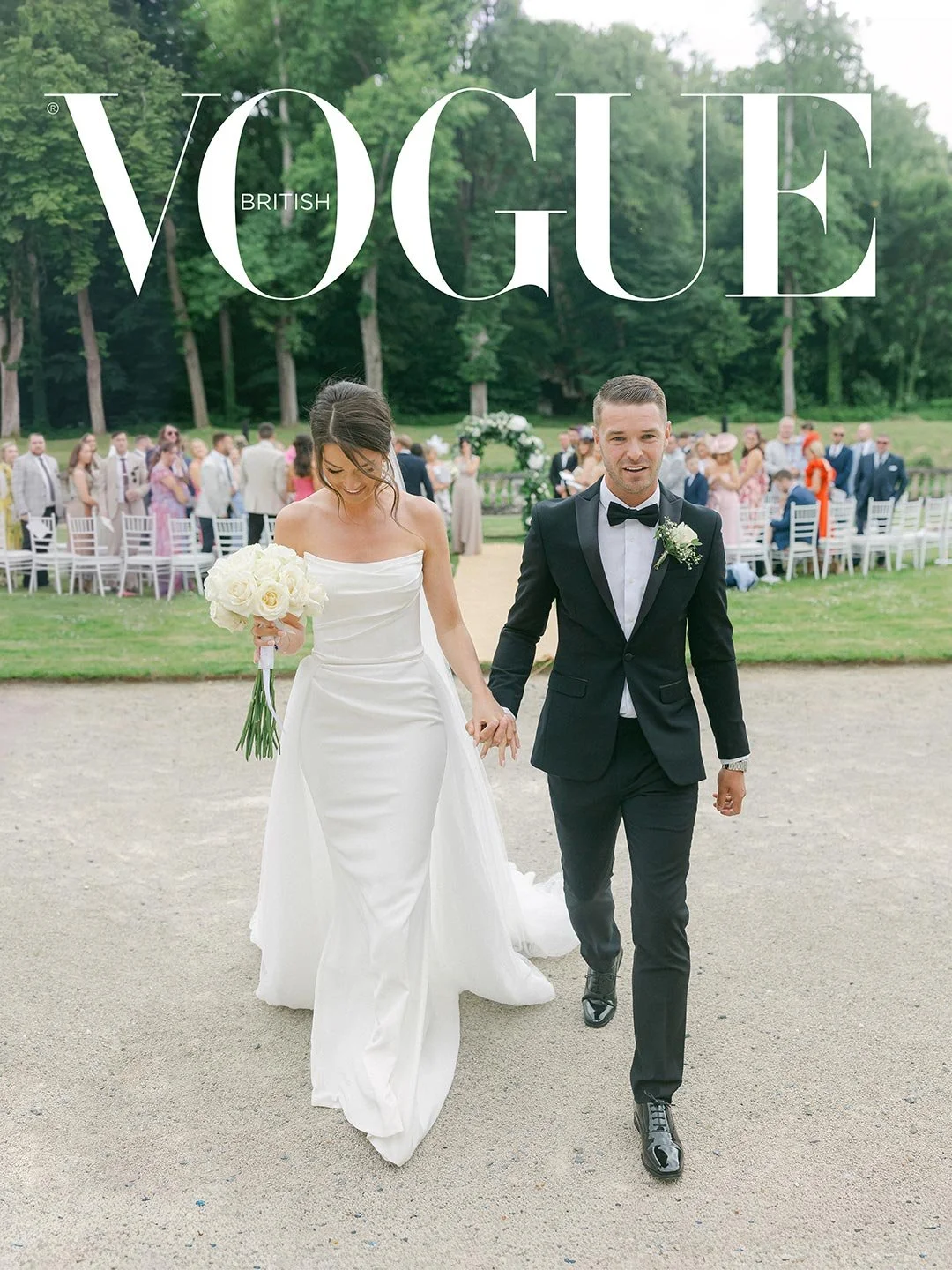
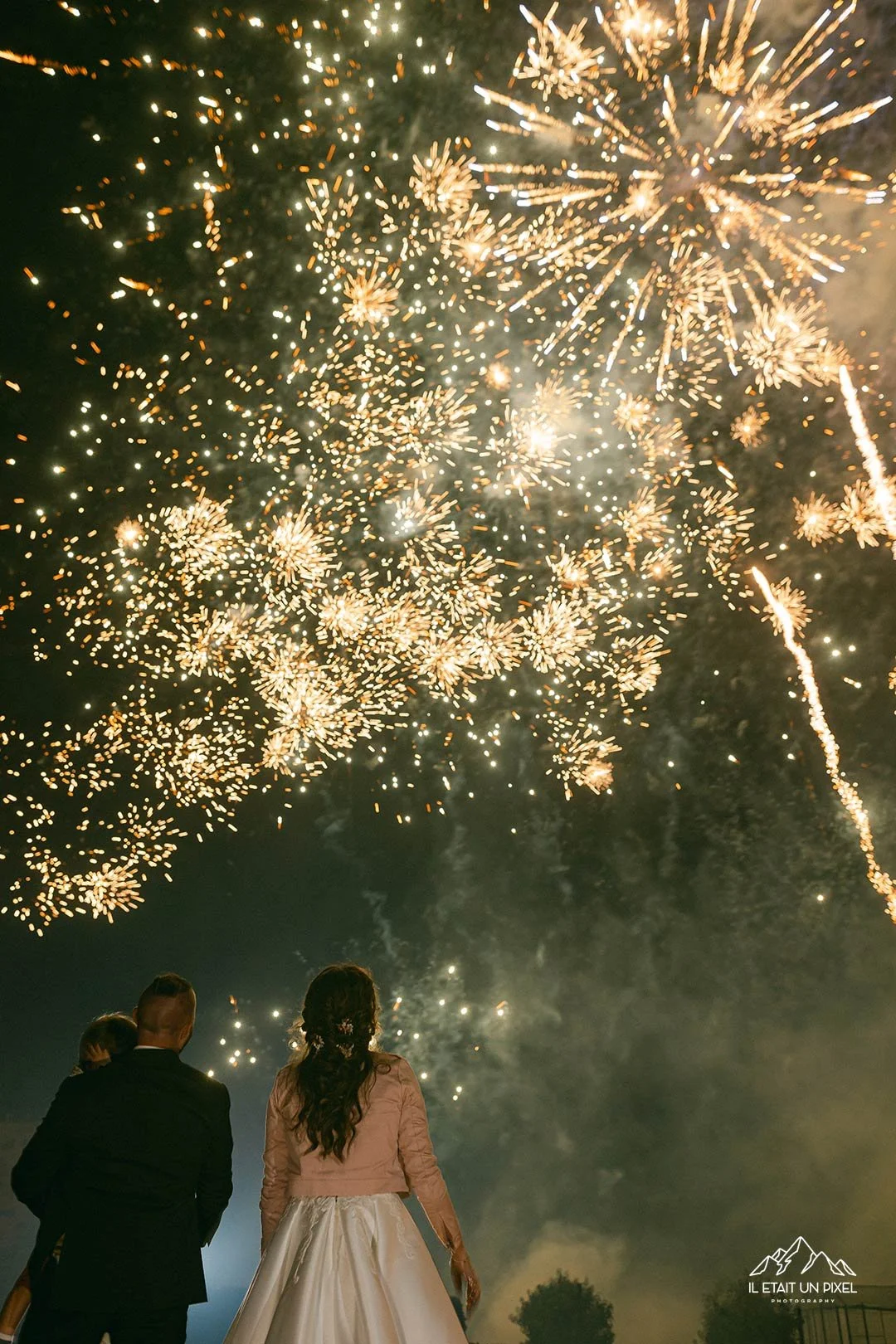
Strip away the logistics and here is the core distinction. A wedding orbits around shared experience: the day is designed so that the people you love witness, participate, cry, toast and dance. Its best moments are collective, your grandmother's face during the vows, the friends carrying you onto the dance floor, and its gallery reads like an ensemble film.
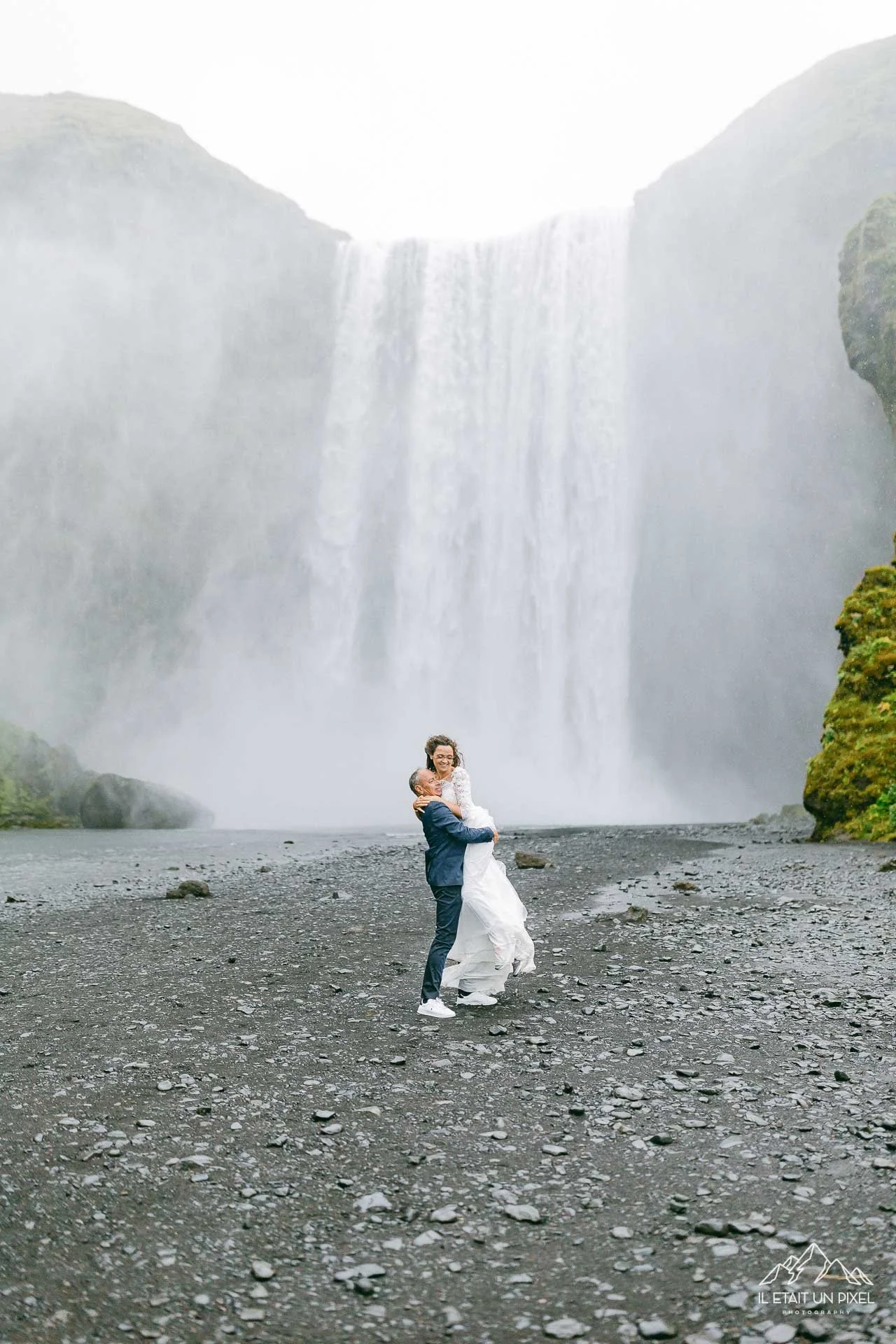
An elopement orbits around the two of you: the day is designed around presence, place and time, a sunrise you actually watch, vows nobody else hears, an afternoon with no schedule but the light. Its best moments are private, and its gallery reads like a love story with two characters and a landscape.
Neither is the brave choice or the selfish one. They are different films, and couples usually know, somewhere below the spreadsheet, which one they are in.
What a French wedding gives you, and what it asks
France does the full wedding better than almost anywhere: château weekends in the Loire Valley where your guests sleep inside the venue, Provençal dinners under plane trees, Atlantic-coast domaines where the party finds the beach at midnight. The multi-day format is the country's quiet specialty, and it is the single biggest gallery upgrade money can buy: a welcome dinner, the wedding day, a day-after session, three chapters instead of one.
What it asks in return: months of planning (a planner is worth their fee for any château weekend), a real budget that scales with the guest count, and the acceptance that the day belongs partly to its choreography. Timelines, seating, speeches: the collective magic has machinery, and the machinery needs tending.
What a French elopement gives you, and what it asks
Freedom, mostly. An elopement in France can happen on a Tuesday in October on a cliff in Brittany, at sunrise in a lavender field, on the empty parvis of a Paris landmark before the city wakes. No venue minimums, no seating chart, no schedule but the sun's. The budget compresses dramatically, and what remains concentrates on the things that survive the day: the place, the film, the photographs.
What it asks in return: honesty about your people. Some parents receive the news as romance; some receive it as loss. The couples happiest with their elopement decided with open eyes, and many soften the edges with the hybrid formats below. It also asks trust in fewer vendors doing more: on an elopement day I am often photographer, film crew, timeline keeper and the person who knows where the light will be in forty minutes.
The hybrids nobody tells you about
The choice is less binary than it looks. The formats I photograph most, in between the poles:
The intimate wedding. Ten to thirty guests, one beautiful table, a real ceremony. It keeps the witnesses and loses most of the machinery; France's smaller manors and coastal domaines are built for exactly this scale.
Elope now, celebrate later. Vows as two in France, a party at home months later with the film screened for everyone. The couples who choose this consistently tell me the screening was its own second wedding.
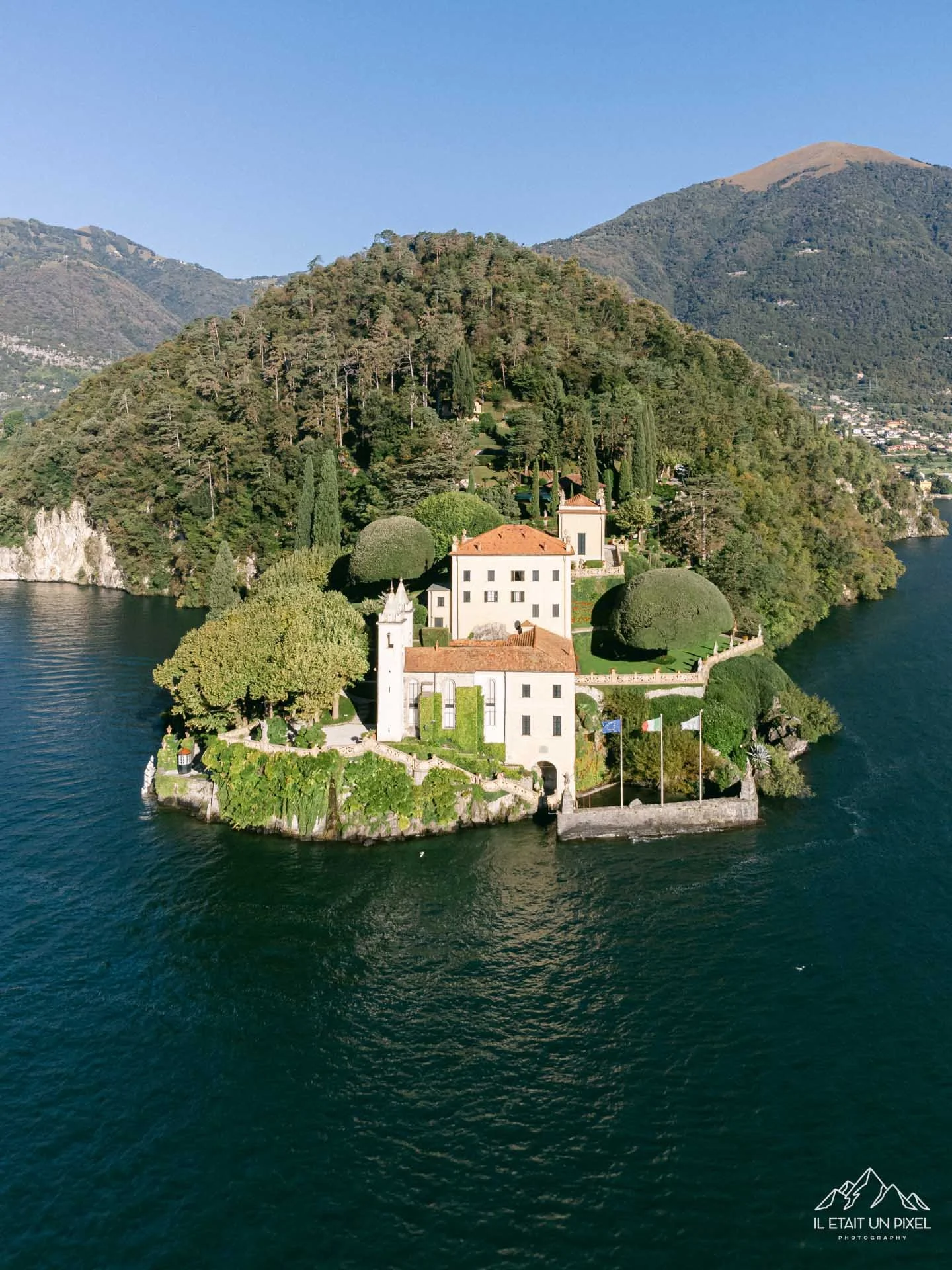
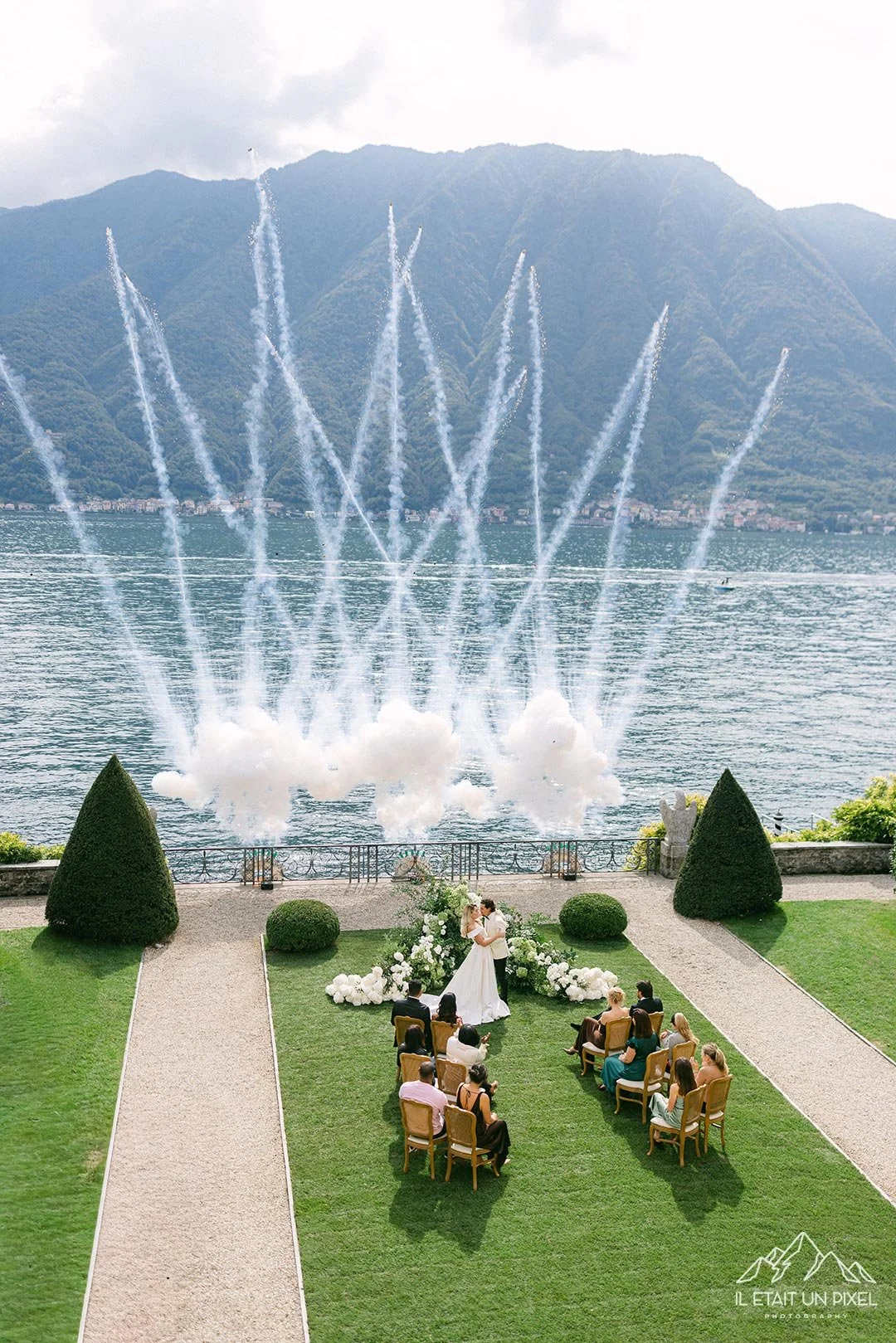
The two-chapter wedding. Ceremony as two (or with parents only) in one place, full celebration in another: I have photographed a couple between Lake Como and a château near Nantes, and another between Paris rooftops and the Provence lavender. When families live on different continents, two chapters are often kinder than one compromise.
The secret wedding. A full wedding disguised as something else until the moment itself, a specialty of mine, complete with QR-code announcement galleries for the reveal. Ask me about it.
How the photography differs, honestly
Because this is the part I can speak to from the inside. A wedding gallery is breadth: dozens of relationships documented, the collective emotion, the party. It needs coverage, timeline discipline and, at château scale, a team; it is why photo and film under one artistic direction matters most at full wedding size.
An elopement gallery is depth: the two of you, rendered with the patience a wedding day never allows. We chase the actual best light instead of the light the schedule permits, we move locations, we wait for the cloud. Elopements are where the images that win awards tend to happen, not because the couples are different, but because the day bends to the light instead of the reverse.
The right question is not "which produces better photos." It is "which photos do you want to grow old with": the ensemble film, or the landscape with two people in it. Many of my couples answer "both," which is what the day-after session and the hybrid formats are for.
The budget question, without numbers theater
A full French wedding scales with guests: venue, catering, accommodation, transport, each line multiplied by headcount. An elopement inverts the math: the headcount is two, so the same total buys a better place, more days, and the full photo-and-film treatment. My elopement collections and how they work are laid out transparently on the pricing page, including the travel-dates system that regularly makes my travel free.
The legal part, briefly
Whichever format you choose, the legal mechanics in France are the same for international couples, and simpler than the internet suggests: most of my couples sign the papers at home and hold the real ceremony here with total freedom of place and hour. The complete guide covers every path.
Frequently asked questions
Can we elope in France and have it feel like a real wedding? Having photographed hundreds of both: yes. The tears do not check the guest count. A celebrant, real vows and a place that means something do the work that two hundred chairs are usually credited with.
What guest count tips the balance toward a wedding? In my experience the machinery arrives around thirty: above it, you gain planners, timelines and transport; below it, the day still runs on trust and daylight.
Can you shoot both formats? They are the two halves of my work: editorial and documentary, photo and film, one team either way. The portfolio holds full château weekends and two-person clifftops side by side.
We are torn. What do you actually recommend? I ask couples one question: whose faces do you need to see during the vows? If names come immediately, plan a wedding, however small. If the answer is each other's, elope, and screen the film for everyone later.
Where to go next
If the wedding is winning, start with the region: the Loire Valley, Provence and Vendée guides carry the full playbook. If the elopement is winning, the elopement page and pricing show exactly how I build those days. And if you are still torn, write to me with your story; after fifteen years of watching this fork in the road, I can usually tell within one conversation which film you are in.
Where to go next
If the wedding is winning, start with the region: the Loire Valley, Provence and Vendée guides carry the full playbook. If the elopement is winning, the elopement page and pricing show exactly how I build those days. And if you are still torn, write to me with your story; after fifteen years of watching this fork in the road, I can usually tell within one conversation which film you are in.
You might also like
Paris wedding guide // Nantes // Vendée // Provence // Como Lake weddings // Amalfi Coast