
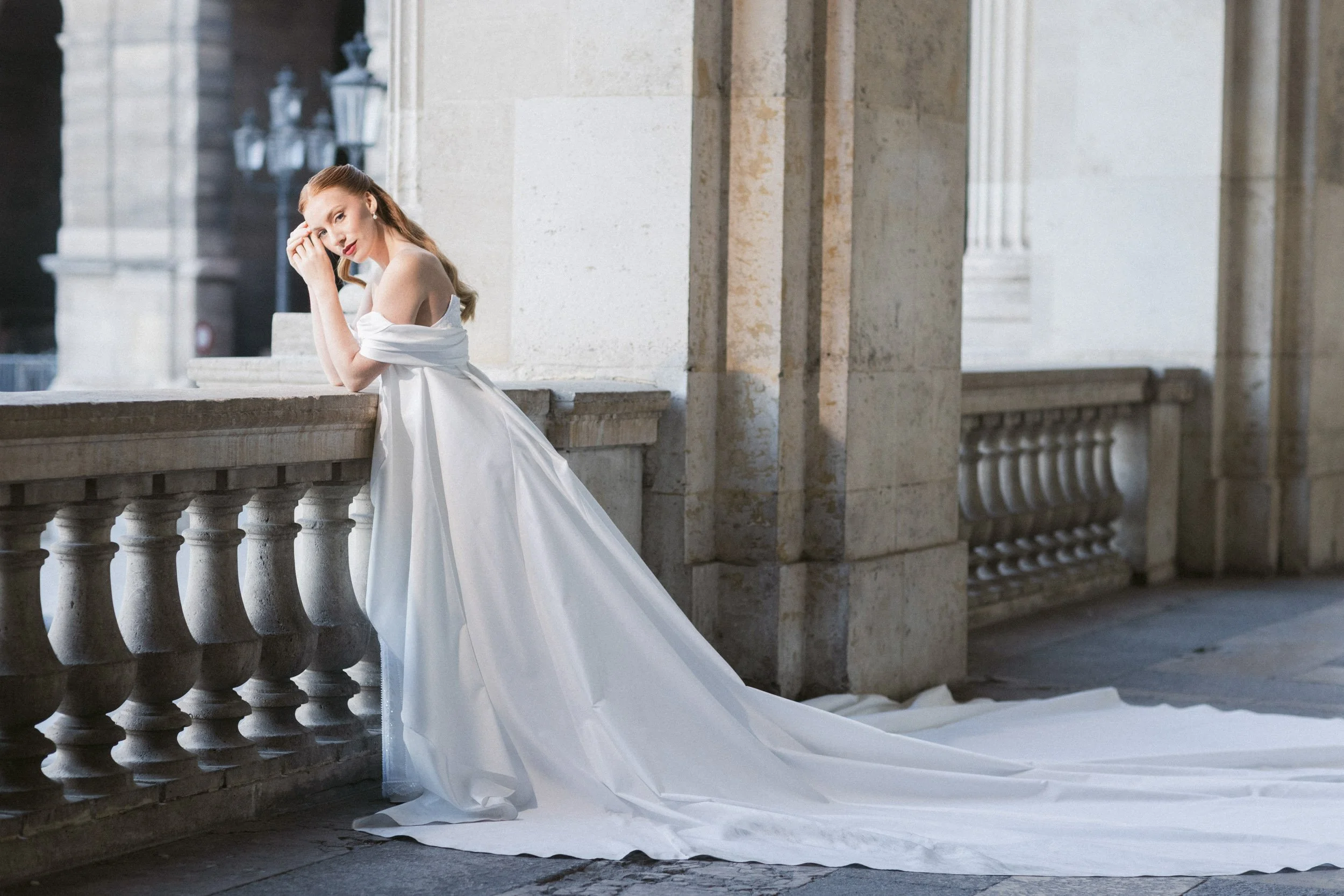
How to Get Married in France: The Complete Guide
A Guide for International Couples
France rewards couples who plan with intention. A wedding here isn't about importing spectacle: it's about borrowing a setting that has spent centuries learning what beauty is: a Loire Valley château, a Provence garden at golden hour, a Paris rooftop at dusk.
Last reviewed: [July 2026]
How to Get Married in France, Explained by Someone Who Watches It Happen Every Week
Every year, couples from the United States, the United Kingdom, Australia and everywhere else decide their wedding belongs in France: a château weekend in the Loire Valley, vows in a Provençal garden, an elopement on the Atlantic coast at sunset. And almost every one of those couples, somewhere around midnight on a Tuesday, hits the same wall of confusing search results about French marriage law.
Let me untangle it. I am a wedding photographer and videographer based in western France, and international couples make up a huge part of my work. I have watched this process from the inside for fifteen years. Here is how getting married in France actually works, without the legalese.
The single most important thing to understand
You do not need to be legally married in France for your French wedding to be completely real.
Read that twice, because it dissolves 90 percent of the stress. French law separates the legal act (a short civil procedure) from the celebration (the ceremony, the vows, the dress, the tears, the party). Most international couples do the first at home and the second in France. Nobody at your wedding will know or care where the paperwork happened; your marriage certificate from your home country is exactly as valid, and your ceremony in France is exactly as meaningful.
With that established, you have three possible paths.
Path 1: The symbolic ceremony (what most of my couples do)
The legal part
You handle the legal marriage at home: a city-hall appointment before or after your trip, ten minutes, two signatures. Then you hold your real wedding in France as a symbolic or celebrant-led ceremony.
The advantages are total. No residency requirements, no French paperwork, no timing constraints. Your ceremony can happen anywhere, in the château garden, on a clifftop, on a beach at golden hour, at any time of day, which matters enormously for your photographs. You can be married by a professional celebrant, a bilingual officiant, or your best friend. The ceremony can be exactly as long, as personal and as unconventional as you want. And most local French couples do the same!
I will be honest about the emotional question couples ask me: "will it feel real?" Having photographed hundreds of these ceremonies, I can tell you the tears do not check the paperwork. Some of the most overwhelming ceremonies I have ever documented were symbolic ones, precisely because every word in them was chosen rather than required.
Path 2: The legal civil marriage in France
Possible, but France makes you earn it. Civil marriage happens at the mairie (town hall) and is the only legally binding form of marriage in France; and the law requires a genuine connection to the commune where you marry. In practice, at least one of you (or one of your parents) needs residence ties to that commune, generally demonstrated by about a month of continuous residence before the banns are published.
If you qualify, expect a paperwork season: recent birth certificates with apostilles and certified French translations, proof of identity and residence, a certificate of celibacy or of legal capacity to marry from your home country (often called a certificat de coutume), and the publication of banns at the mairie at least ten days before the ceremony. Requirements vary by mairie and by nationality, and the mairie's list is the one that counts.
Who chooses this path? Couples where one partner already lives in France, binational couples, and couples for whom the French marriage certificate itself matters (for residency or family reasons). If that is you, start three to six months out and let a planner or the mairie guide the document list.
Path 3: The religious ceremony
In France, a religious wedding has no legal standing on its own; the civil marriage must happen first, and the officiant will ask for your civil certificate. Foreign couples who want a Catholic ceremony in a French church typically complete their civil marriage at home, then work through their home parish and the French diocese for permissions. Many châteaux and estates also have private chapels where religious or spiritually-inspired ceremonies can be held with more flexibility. If a church ceremony is central to your dream, raise it first with every venue you consider; I can tell you from experience which regions and estates make it easy.
Your timeline, whatever the path
12 to 18 months out: choose region and season, secure the venue, and book the once-only vendors. Photographers and videographers you actually want are booked 12+ months ahead for May, June and September Saturdays; the same is true of the best planners and floral designers.
6 to 12 months out: legal path chosen and started if applicable; celebrant booked and first conversations about the ceremony's content; guest travel logistics launched.
3 to 6 months out: menu tastings, design, and the piece I get personally involved in with my couples: building the day's timeline around light rather than convention. In a French June, sunset lands around 9:45 pm. A ceremony at 5:30, cocktails at 6:30 and a fifteen-minute portrait escape at 9:30 produces radically better images than a schedule imported from another latitude.
The final month: documents finalized if legal-in-France; vows written; and my universal advice: arrive in France at least two days early. Jet lag is not invited to your wedding.
What it costs, in honest terms
The legal procedures themselves are nearly free; it is everything around them that adds up. As broad orientation from the weddings I photograph: an intimate elopement in France with a celebrant, florals, hair and makeup, a beautiful dinner and full photo and film coverage represents a mid-four-figure to low-five-figure project. A multi-day château wedding for 60 to 120 guests is a five-figure project that can climb steeply with the venue's and vendors’ fame. Region moves the number: the Loire Valley and the Atlantic coast deliver château grandeur at meaningfully gentler budgets than Provence, Paris or the Riviera. [see: Loire Valley wedding guide]
The mistakes I watch couples make (so you can skip them)
Booking the venue before checking the sunset. A west-facing terrace and a well-timed ceremony cost nothing and transform your photographs and experience.
Assuming vendors work like they do at home. August is sacred vacation territory in France, especially in Paris; some suppliers genuinely close. Peak Saturdays sell out a year or more ahead, and the responsiveness culture is different: fewer instant replies, absolutely reliable delivery.
Over-scheduling the wedding day. French weddings breathe: long cocktails, long dinners, dancing until genuinely late. Fighting that rhythm creates stress; designing with it creates the atmosphere you came to France for. But if this is what you want, some venues that only do US or UK weddings are perfect for you.
Leaving the ceremony language unplanned. A bilingual celebrant, or a ceremony structured so both languages carry real moments rather than translations, keeps both families inside the emotion. I have translated at international photography conferences for years; language design is a real craft and worth an hour of planning.
Frequently asked questions
Is a symbolic ceremony in France legally binding? No, and that is its superpower: because it is not a legal act, it has no requirements at all. Your legal marriage happens in your home country.
Can two foreigners legally marry in France with no residency? As a rule, no; the residence connection to the commune is required. The symbolic path exists precisely for this.
Do we need our documents translated? For a legal French marriage, yes: certified (sworn) French translations plus apostilles on the originals, per your mairie's list.
Will our home country recognize a French civil marriage? Generally yes, usually via registration of the French certificate with your home authorities; confirm with your consulate.
Can you recommend celebrants, planners and other vendors? Yes, region by region: it is one of the most useful things fifteen years here has given me. Ask when we talk.
Where to go next
Choose your region first; it decides everything downstream. Start with the guides for the Loire Valley, Provence, Paris, or the Vendée coast. If you are leaning intimate, read the elopement resources. And when your plan needs eyes that have watched hundreds of French weddings unfold, tell me your story.
Paris Wedding Guide // Getting married in Loire Valley // Vendée // Provence // Como Lake // Amalfi // [ all guides ]